
 If your basement floods, make it safe first: stay out of standing water until the power to the basement is off, and call your utility if you cannot reach the breaker panel without stepping in water. Then document the damage for insurance, pump or vacuum out the water, and get everything dry within 24 to 48 hours. Anything porous that stayed wet longer than that, such as carpet, drywall, and insulation, usually has to go. Once the basement is dry, find out how the water got in and seal it so you do not do this again next spring.
This guide covers each step in order: safety, cleanup, drying, mold prevention, finding the cause, and waterproofing.
Step 1: Make the basement safe
- Electricity. Water and live circuits can kill. Do not walk into a flooded basement if outlets, cords, or appliances are under water. If the main panel is upstairs or you can reach it from dry ground, shut off power to the basement. If not, call the electric utility to disconnect power at the meter.
- Gas. If you smell gas, leave the house and call the gas company from outside. A flooded furnace or water heater should be checked by a professional before you restart it.
- Contaminated water. Floodwater from outside and sewer backups can carry sewage, chemicals, and bacteria. Wear rubber boots, waterproof gloves, and eye protection. Keep children and pets out. A sewage backup is a job for a professional cleanup company.
- Carbon monoxide. Never run a gas generator, pressure washer, or pump inside the house or basement, or near an open window.
- Structural damage. If walls are bowed, cracked open, or the floor has heaved, stay out and call a contractor or engineer.
If the whole house is flooding from a river, storm surge, or flash flood, evacuate first and deal with the basement later. Do not drive or walk through flooded streets.
Step 2: Document the damage and call your insurer
Before you move or throw anything out, take photos and video of the water level, the walls, the floor, and every damaged item. Write down model and serial numbers for appliances. Call your insurance company as soon as you can and ask what they need from you.
Standard homeowners policies usually do not cover flooding from surface water or rising groundwater. That coverage comes from separate flood insurance, such as a National Flood Insurance Program policy. Damage from a burst pipe is often covered, and sewer or sump pump backup is often covered only with an added endorsement. Keep receipts for pumps, fans, dehumidifier rental, and cleanup supplies.
Step 3: Remove the water
- For a few inches of water, use a wet/dry shop vacuum, mops, and squeegees toward a floor drain or sump pit.
- For deeper water, rent a submersible pump and run the discharge hose well away from the house.
- If the ground outside is still saturated after a major flood, FEMA and the Red Cross advise pumping a deep basement out gradually, about a third of the water per day. Water in the soil pushes on the walls from outside. Draining the basement too fast removes the water pushing back from inside and can crack or collapse the walls.
Shovel out mud while it is still wet. It is much harder to remove once it dries.
Step 4: Tear out what can’t be saved
The EPA advises drying wet building materials within 24 to 48 hours to prevent mold. Porous materials that stayed wet longer, or that soaked up floodwater from outside, generally cannot be cleaned well enough and should be removed:
- carpet and carpet pad
- drywall, cut at least 12 inches above the water line
- fiberglass batt insulation in the walls
- ceiling tiles, cardboard boxes, and upholstered furniture
Hard surfaces such as concrete, tile, metal, glass, and solid wood framing can usually be cleaned and kept.
Step 5: Clean, disinfect, and dry
- Scrub hard surfaces with detergent and water to remove silt and dirt. A disinfecting cleaner such as Vital Oxide kills mold and mildew and does not need rinsing.
- Open windows if the outside air is dry, and run fans to move air across the wet surfaces.
- Run one or more dehumidifiers around the clock. Keep relative humidity below 50 percent.
- Pull baseboards and open wall cavities so framing can dry.
- Check the concrete with a moisture meter, or tape a square of plastic to the wall and floor for 24 hours. Moisture under the plastic means the concrete is still wet.
Do not rebuild, paint, or seal until everything is completely dry. Sealing moisture in leads to mold and coating failure. For mold that has already started, follow our guide on how to get rid of black mold in a basement.
Step 6: Figure out why the basement flooded
Basement flooding is rarely bad luck. Most of the time it comes from one of these:
- Hydrostatic pressure. When the soil around the foundation is saturated, water pushes through cracks, the joint where the wall meets the floor, tie-rod holes, and the pores of the concrete itself. Concrete and block are full of tiny capillaries, and water moves through them.
- Surface water. Clogged gutters, short downspouts, and soil sloping toward the house pour water against the foundation. Window wells without drains fill up and spill in. See how to protect your home from exterior water damage.
- Snow melt. A heavy snowpack melting fast, as in the Buffalo, New York area after storms dropped more than seven feet of snow, saturates the ground for days.
- Sump pump failure. Power outages and worn-out pumps are a leading cause of basement floods. Read the pros and cons of sump pumps.
- Sewer backup through a floor drain during heavy storms. A backwater valve installed by a plumber can stop this.
- Plumbing failures such as a burst supply line or water heater.
Look at the walls once they are dry. White chalky efflorescence, tide lines, and stains show where water came through. Our post on what causes leaky basements goes into more detail.
Step 7: Stop the next flood
Start outside, where the fixes are cheapest: clean gutters, extend downspouts at least 4 to 6 feet, regrade soil away from the foundation, and add drains or covers to window wells.
Inside, the common options each handle a different part of the problem.
- Sump pumps and interior drains let water in and pump it back out. They handle water at the floor but depend on power and do nothing for water coming through the walls. See interior French drain pros, cons and cost.
- Exterior membranes stop water at the outside face of the wall, but adding one to an existing home means digging down to the footing, which is costly and tears up landscaping.
- Masonry paints and cement coatings sit on the surface. Under water pressure from behind they tend to blister, crack, and peel.
- Penetrating liquid rubber seals the concrete itself from the inside, along with cracks and the cove joint.
Our basement waterproofing options compared post lays these out side by side, and basement waterproofing costs covers the price of each.
Waterproof your basement after a flood with SANI-TRED
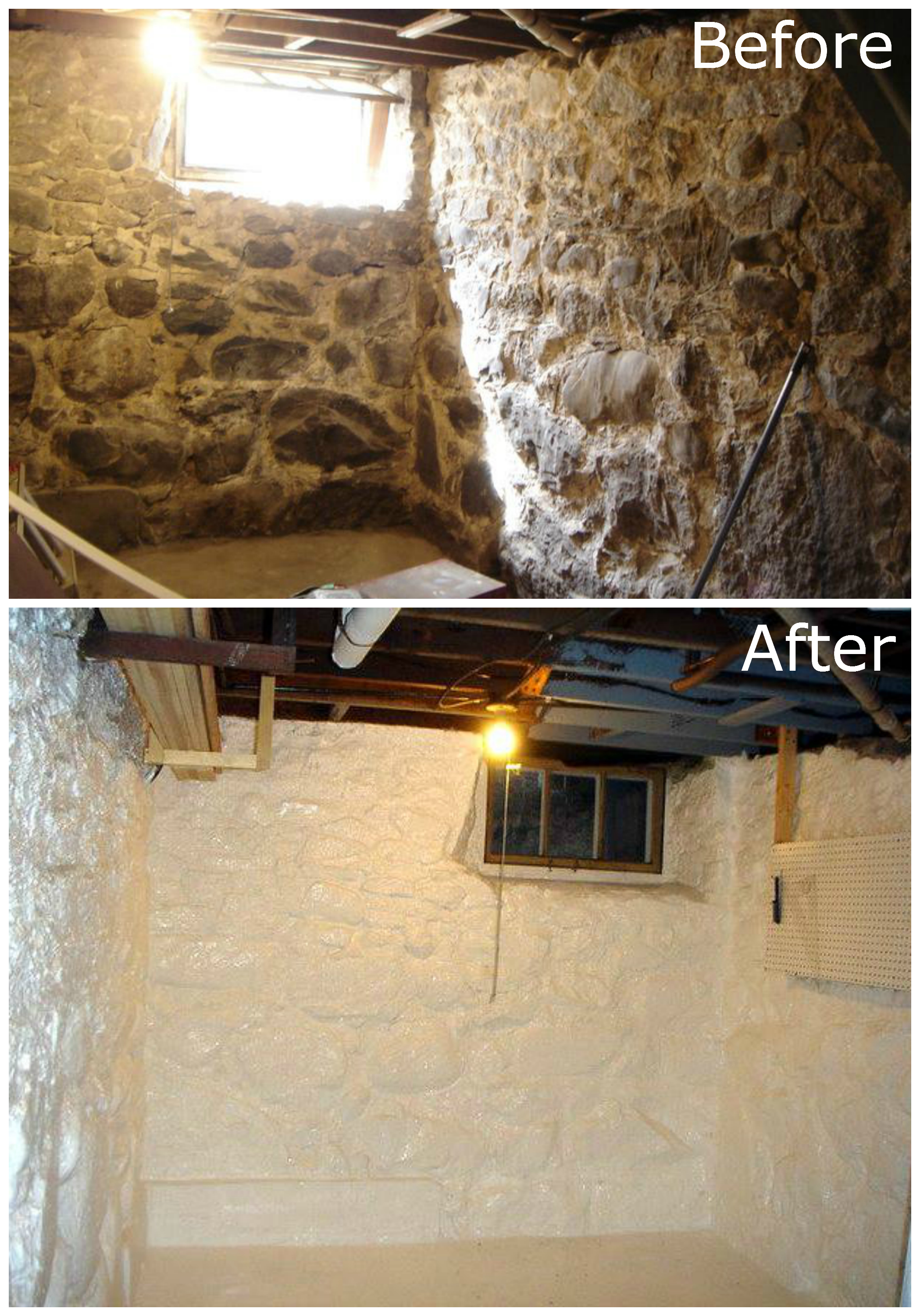
SANI-TRED is a DIY liquid rubber system that seals basement walls and floors from the inside. PermaFlex soaks deep into the pores of the concrete and bonds to it. Cracks, voids, and the wall-floor joint are filled with a rubber patching compound made by mixing LRB (Liquid Rubber Base) with TAV. The system cures into a seamless rubber membrane that holds back water and water vapor under pressure from outside, and it stays flexible as the foundation moves through freeze-thaw cycles. It also blocks 99 percent of radon gas.
The process is prep, prime, patch, and topcoat. The products are solvent free, non-flammable, and low VOC, and the basement system carries a lifetime warranty. After it cures you can paint over it or finish the room.
One customer wrote: “I had researched many different products to repair my basement leaks. I was not really sure if it would work, but I was willing to give it a try. I was amazed, it not only worked and sealed my basement so well, I bought more for my deck and pool area.” (Mark Shu)
- See the SANI-TRED basement waterproofing system
- Follow the step-by-step how-to guide
- Calculate the cost for your basement
- Try a sample pack with our Double Your Money Back Guarantee
- Call 1-866-784-3308 to talk with a SANI-TRED tech
Frequently asked questions
How long does it take a flooded basement to dry out?
With pumps, fans, and dehumidifiers running, surfaces often dry in a few days. Concrete walls and slabs can hold moisture for a week or longer. Test with plastic or a moisture meter before rebuilding.
Can I stay in my house if the basement flooded?
Usually, if the power to the basement is off, there is no gas leak, and the water is not sewage. If sewage or floodwater from outside came in, keep people out of the basement until it is cleaned and disinfected.
Will homeowners insurance cover a flooded basement?
It depends on the source. Burst pipes are often covered. Surface flooding and groundwater usually need separate flood insurance, and sewer or sump backup usually needs an added endorsement.
How soon does mold grow after a basement flood?
Mold can start growing on wet materials within 24 to 48 hours, which is why fast drying and removing soaked carpet and drywall matter.
How much does it cost to fix a flooded basement?
Forbes Home reports an average of about $4,300 to repair a flooded basement, and costs climb with mold remediation, flooring, and contents. Costs vary widely by region and damage.
How do I keep my basement from flooding again?
Fix the drainage outside first, keep any sump pump maintained with a backup, and seal the walls, floor, and cracks so water cannot get through the concrete.
Sources: U.S. EPA, “A Brief Guide to Mold, Moisture, and Your Home”; CDC, flood cleanup and carbon monoxide guidance; FEMA and American Red Cross, “Repairing Your Flooded Home”; FEMA National Flood Insurance Program; Forbes Home, basement flooding repair cost.
Would this system also help to keep bugs out of the basement by filling in all the little entrances?
That’s correct Emily. The Sani-Tred product line will not only keep water out, but will keep the bugs out as well!
Really need help with water in basement iv been flooded seavral times live in Rosemead CA will this product help me
It has helped many homeowners forever waterproof basements give us a call.
Can you apply over mold or mildew?
Do I need to repoint the basement rock walls before using this material. Can this be used as substitute for mortar. Thanks
My house is 100 years old. I have some cinder block that has crumbled. When i re-concrete the basement, how does sani-tred work to stop the damage on the outside since you apply it on the inside? If the block is crumbling on the inside isn’t it also damaged below grade on the outside?
Sharon: We recommend removing all previous coatings or imperfections before applying SANI-TRED. For best adhesion, use a pressure washer to remove all previous coatings, mold, mildew, etc., let dry, then apply the priming layer of PermaFlex to begin the SANI-TRED application process. For more information, visit https://sanitred.com/basement-waterproofing/how-to-waterproof-your-basement-with-sanitred/
How do you find out what the name of this stuff is and is it pricey
.
You can find SANI-TRED here: https://sanitred.com/