
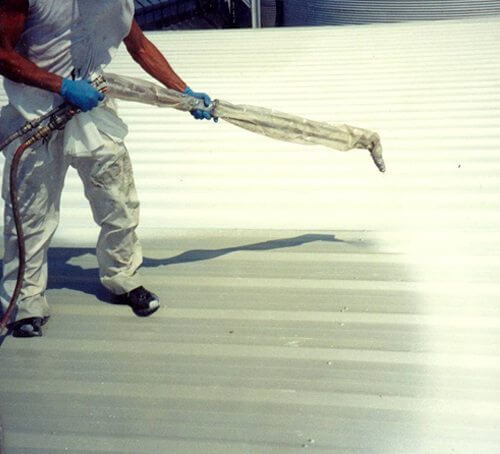
 A spray roof sealant is a liquid coating you spray over an existing roof so it cures into one continuous waterproof skin. It covers seams, fasteners, and small cracks in a single pass, and on most flat and low-slope roofs it goes on over the old surface without a tear-off. Whether it lasts depends on three things: the type of coating, how well you prepare the roof, and how thick you apply it.
This guide covers the common types of spray-on roof coating, which roofs they suit, how to apply one step by step, and where flat and commercial roofs need extra attention.
What a spray roof coating does (and what it can’t do)
A spray-applied coating fills the small gaps that let water in: open seams on metal panels, backed-out screws, hairline cracks in concrete, and worn spots on old built-up or modified bitumen roofs. Because it goes on as a liquid, it wraps around vents, pipes, HVAC curbs, and drains, which are the places where sheet roofing and shingles usually leak first.
A coating will not fix a roof that is structurally failing. If the deck is rotten, the insulation underneath is soaked, or the roof sags and holds water across large areas, repair those problems first. A coating seals the surface. It does not replace a roof deck.
Types of spray roof sealant
Most products sold as “spray on roof coating” or “roof sealant spray” fall into a few groups.
- Aerosol rubberized sealant (spray cans). Good for a single small leak around a vent or flashing. The film is thin, so it is a patch, not a full roof coating.
- Acrylic elastomeric coatings. Water based, inexpensive, and usually white for reflectivity. They work on sloped roofs that shed water fast. Standing water softens many acrylics over time, so they are a poor match for flat roofs that pond.
- Silicone coatings. Hold up well to sun and ponding water. Very little bonds to cured silicone, so future recoats and repairs usually need more silicone.
- Polyurethane coatings. Tough and abrasion resistant, often used where there is foot traffic. Many are solvent based and have a strong odor during application.
- Spray polyurethane foam (SPF). Sprayed as an expanding foam that insulates, then covered with a protective coating. This is a contractor job with specialized rigs.
- Liquid rubber systems. Cure to a flexible rubber membrane. SANI-TRED falls in this group. It bonds to the substrate and stays flexible as the roof expands and contracts.
For a deeper look at the elastomeric group, see our guide to elastomeric roof coatings.
Which roofs can you spray-coat?
Metal roofs
Metal roofs are the most common candidate. Leaks start at lap seams and screw heads, and rust spreads from there. A coating that bonds to steel and seals the fastener heads stops both problems. SANI-TRED has a full walkthrough on metal roof repair and coating, including photos of sealed nail heads and seams.
Flat roofs
Flat roofs leak more often than sloped roofs because water sits on them. The coating has to handle ponding water around the clock, not just rain running off. Seams in the existing roof, the edges at parapet walls, and the flashing around drains and scuppers need the most attention. Choose a coating that is rated for standing water, and build up extra thickness in low spots.
Commercial roofs
Commercial roofs on stores, warehouses, and offices are large, low slope, and crowded with rooftop units, vents, and conduit. Sheet liners on these roofs fail at punctures and seams, and one tear can let water travel a long way under the membrane before it shows up inside. A fluid-applied coating seals around every penetration without cutting and lapping material. On a big roof it also lets you repair one section at a time instead of replacing the whole thing.
Concrete and plywood roof decks
Concrete roof slabs and plywood decks that people walk on can also be coated. These need a coating that handles foot traffic and stays bonded when water sits on it. See how to waterproof plywood decks and roofs for that type of project.
Green roofs
A green (vegetated) roof has three basic layers: plants, a growing medium, and a waterproof membrane that keeps the water in the soil away from the roof below. The membrane is buried and hard to reach once the soil is in place, so it has to be right the first time. A fully bonded, seamless coating works well here because there are no laps to open up under the weight of wet soil.
Spray coating vs. tearing off and re-roofing
Coating over the existing roof has some clear advantages when the deck underneath is sound:
- Less cost and less mess. No tear-off, no dumpster, no landfill fees for old shingles or membrane.
- Fewer seams. A cured liquid coating is one continuous layer. Sheet roofing has a lap seam every few feet.
- Easier detail work. Liquids flow around HVAC units, vents, and downspouts instead of being cut and flashed.
- Repairs stay simple. A damaged spot can be cleaned and recoated instead of patched with a different material.
Re-roofing makes more sense when the deck is damaged, the insulation is wet, or you are changing the roof shape.
How to apply a spray-on roof coating, step by step
These steps follow the SANI-TRED roof sealing process. Other coatings follow a similar pattern, but check the maker’s instructions for coverage rates and cure times.
1. Inspect and repair the roof
Walk the whole roof. Mark open seams, loose fasteners, blisters, cracks, and soft spots. Replace any rotted decking and tighten or replace loose screws on metal roofs.
2. Clean and dry the surface
Remove dirt, loose rust, peeling coatings, and anything crumbly. The surface has to be clean, dry, and free of old products and foreign matter. A coating can only be as strong as the surface it bonds to, so this is the step that decides how long the job lasts.
3. Prime
SANI-TRED uses PermaFlex as the primer, applied at about 240 square feet per gallon. It soaks into the surface and gives the next layers something to bond to.
4. Patch seams, holes, and penetrations
Mix two parts LRB (Liquid Rubber Base) with one part TAV (Thickening Activator) to make a rubber patching compound. Use a 3/4 inch bead on open seams and a 1 inch bead where walls meet the roof and around most fixtures. Fill cracks and holes, and build up profile on rough areas. The crack filling calculator estimates how much mix you need.
5. Topcoat
Apply one coat of PermaFlex at about 240 square feet per gallon. SANI-TRED can be rolled, brushed, or sprayed with a hopper gun or high volume sprayer. On flat roofs or areas that will see foot traffic, plan for more thickness. One SANI-TRED contractor sealed a flat roof under a ski lodge deck with two coats of PermaFlex and a 40 mil LRB flood coat in between, for a fully bonded roof about 60 mils thick. The mil thickness calculator shows how coverage rate relates to film thickness.
6. Watch the weather
Apply the primer and the LRB/TAV patching mix at least 45 minutes before rain so droplets do not mark the fresh material.
Flat roof repair tips
- Clear drains and scuppers before you coat. A flat roof that drains is far easier to keep dry.
- At parapet walls covered with old tar, strip back to a clean section of wall below the cap, or cover the contaminated area with plywood and seal the top edge with LRB/TAV.
- Run nailed 2×4 “L corners” along the base of parapet walls under new plywood. The slight raise directs water away from the seam at the base of the wall, which is a common leak point.
- Fix small problems as you find them. A cracked seam this year becomes wet insulation next year.
Frequently asked questions
Does spray roof sealant stop leaks?
Yes, when the leak is in the roof surface: seams, fasteners, cracks, and flashing. Clean and dry the area, patch the opening, and coat over it. A leak caused by a rotted deck or failed structure needs that repair first.
Can you spray roof coating over shingles?
Some coatings are sold for asphalt shingles, but shingles are built to shed water through overlapping pieces, and coating them can trap moisture. Coatings work best on metal, flat, and low-slope roofs. Talk with the coating maker before you coat a shingle roof.
How long does a spray-on roof coating last?
It depends on the product, the prep, and the thickness. Thin coats of inexpensive acrylic often need redoing within a few years. SANI-TRED roof coating carries a lifetime warranty.
What is the best roof sealant for a flat roof?
Pick one rated for ponding water that bonds to your roof surface. Acrylics that soften under standing water are a poor choice. Silicone and liquid rubber coatings are better suited to flat roofs.
Can I spray a roof coating myself?
Yes. Aerosol cans handle small spots, and a hopper gun or airless sprayer covers a full roof. Rolling works too and gives you more control on small roofs. Work on a dry day, wear fall protection, and follow the maker’s coverage rate.
Seal your roof with SANI-TRED
SANI-TRED is a liquid rubber system that bonds to metal, concrete, and wood and cures to a seamless rubber membrane. It goes on over most existing roofs without a tear-off, seals screw and nail heads, and can be rolled, brushed, or sprayed. Products are solvent free, non-flammable, and low VOC, and the roof system carries a lifetime warranty.
- See the SANI-TRED roof coating and repair system
- Follow the step-by-step roof sealing guide
- Compare SANI-TRED with other roofing products
- Order PermaFlex, LRB, and TAV in the shop
- Call 1-866-784-3308 to talk through your roof with a SANI-TRED tech