
Many farms use grain bins to store and manage grain, corn, and other crops. Grain bins are important for this use and keeping them sealed is crucial. Sealing grain bins can be done in any number of ways, but it’s best to do it right the first time. By keeping your grain bin sealed, you’ll protect not only your crops, but your concrete pad as well. Most grain bins have a concrete pad beneath them and protecting it is just as important as the rest of the grain bin.
Protecting and sealing your grain bin is important for any residential or commercial facility and using the right material is key. Some coatings attempt to seal grain bins, but either don’t last or can’t do the job at all. Grain bins are incredibly important and choosing the wrong sealer can be costly and time-consuming. To effectively run your farm or commercial facility, you can’t be wasting your time with inferior, short-term sealers. There are plenty of sealing and waterproofing products on the market, but there’s only one that can do it all and do it permanently. That’s why you need SANI-TRED®.
The SANI-TRED® Solution
If you need to successfully seal and waterproof your grain bin, you definitely need to choose the right material. There are plenty of sealing products on the market, but none can bond to both steel and concrete as well as SANI-TRED®. Applying SANI-TRED® sealant to your silo grain bin will protect and waterproof it for the life of the structure. For long term grain bin sealing, SANI-TRED® is the best product you can buy. No other sealing or waterproofing product can match what SANI-TRED® can do. Use it yourself and seal your grain bins permanently. If you want to permanently and completely seal your grain bin, choose SANI-TRED®.
Benefits of sealing a grain bin
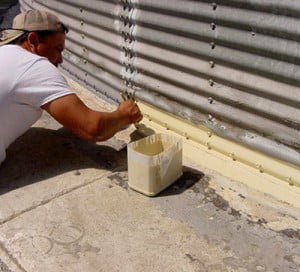 A properly sealed grain bin does more than keep rain off the crop. Research on grain storage points to several benefits:
- Water stays out. Water seeping in at the base or the wall joints wets the grain and lets fungus form.
- Fumigation works. Phosphine gas has to stay in the bin long enough to kill insects. Poor sealing is the main cause of failed fumigations in U.S. grain bins, and bolted steel bins, with their many joints and holes, are the hardest to get tight.
- Fewer insects and rodents. Gaps at the base, sidewall doors, fans and conveyors are open doors for pests.
- Less rust. A sealed base keeps moisture off the steel, so corrosion does not take hold and spread.
Not every bin ships with a seal kit, and the kits that do come with bins do not always seal openings and joints tightly enough to hold phosphine gas and keep out water and pests. Sealing the base and sidewall joints yourself closes that gap. Grain storage research also advises against sealing the headspace of a steel bin permanently. Leave it able to breathe, and close it only for fumigation or a controlled atmosphere treatment, or condensation can damage the stored grain.
Why most grain bin sealers fail
Metal grain bins have always been hard to waterproof. Many products on the market last a season or less. A bin is not a rigid structure: the steel expands and contracts with temperature changes and every time the bin is filled and emptied. Brittle tar seals and caulks can’t follow that movement. They crack and chip, moisture gets in through the gaps, and rust, corrosion and insects follow. The concrete pad under the bin takes the same punishment from weather and daily use.
SANI-TRED is a liquid rubber. It penetrates the pores of the concrete, bonds to the steel, and cures to a flexible seal that stretches and recovers as the bin moves. It permanently bonds to and seals grain bin surfaces for about half the cost of silicone caulk. SANI-TRED has stated that its grain bin sealant has been endorsed by large bin manufacturers, including Brock/Butler for their commercial bins.
How to seal your grain bin with SANI-TRED
The job follows the same prep, prime, patch and topcoat process SANI-TRED uses on concrete: clean the base and the joint where the steel meets the pad, prime with PermaFlex, fill gaps and joints with a rubber patching compound made with TAV, and topcoat.
- Follow the step-by-step guide: how to seal a grain bin
- See the full grain bin sealing and repair system
- Work out how much material your bin needs with the grain bin calculator
Call 1-866-784-3308 to talk with a SANI-TRED tech about your bin before you order, or shop SANI-TRED products.