
Truck bed liner paint is a thick, textured coating you roll, brush, or spray onto a pickup bed to protect the metal from scratches, dents, rust, and sliding cargo. A rubber truck bed liner does the same job with a flexible rubber or polyurethane coating that bonds to the bed and absorbs impact instead of chipping. You can do it yourself in a weekend if you prep the bed properly, which is where most DIY bed liner jobs succeed or fail.
This guide compares the main bed liner options, walks through how to apply a rubber bed liner step by step, and shows a real truck bed coated by a contractor with SANI-TRED.
Drop-in, spray-in, or roll-on bed liner paint?
Drop-in plastic liners
A molded plastic liner that sits in the bed. It is fast to install and easy to remove. The downside is that it is not bonded to the bed. Water, sand, and grit get under it, and the liner rubs against the paint as you drive. That combination often leads to scuffed paint and rust hidden underneath. Drop-ins can also be slippery, so cargo slides around.
Professional spray-in liners
A shop sprays a polyurea or polyurethane coating with high-pressure equipment. These are bonded, tough, and textured. They cost more than DIY options, and the price varies a lot by region, truck size, and coating thickness. Quality depends heavily on the installer’s prep work.
DIY roll-on and spray-on bed liner paint
Kits and coatings you apply yourself with a roller, brush, or spray gun. Products range from thin aerosol cans to thick urethane and rubber coatings. Aerosol cans are fine for touching up a small area, but they go on too thin to protect a full bed that hauls tools, gravel, or equipment. For a working truck, pick a coating that can be built up to real thickness.
Rubber truck bed liners
Rubber and polyurethane coatings stay flexible after they cure. That matters on a truck bed, because the metal flexes under load and expands and contracts with temperature. A hard coating can crack at the seams and corners and let water reach the steel. A flexible rubber coating stretches with the metal and cushions impacts from dropped tools and loads.
What to look for in truck bed liner paint
- Bond to bare metal. The coating has to stick to steel or aluminum, not just sit on top. A poor bond lets water creep under the liner, and rust spreads from there.
- Thickness. Thin coats wear through fast in the loading area and wheel wells. Look for a product that can be built up to tens of mils, not single digits.
- Flexibility. The liner should stretch with the metal without cracking.
- Texture. A textured, slip-resistant surface keeps cargo and boots from sliding.
- Repairability. You should be able to touch up a gouge without stripping the whole bed.
- Odor and safety. Many DIY bed liner products are solvent based. A solvent-free, low VOC product is easier to apply in a garage.
How to apply a rubber truck bed liner, step by step
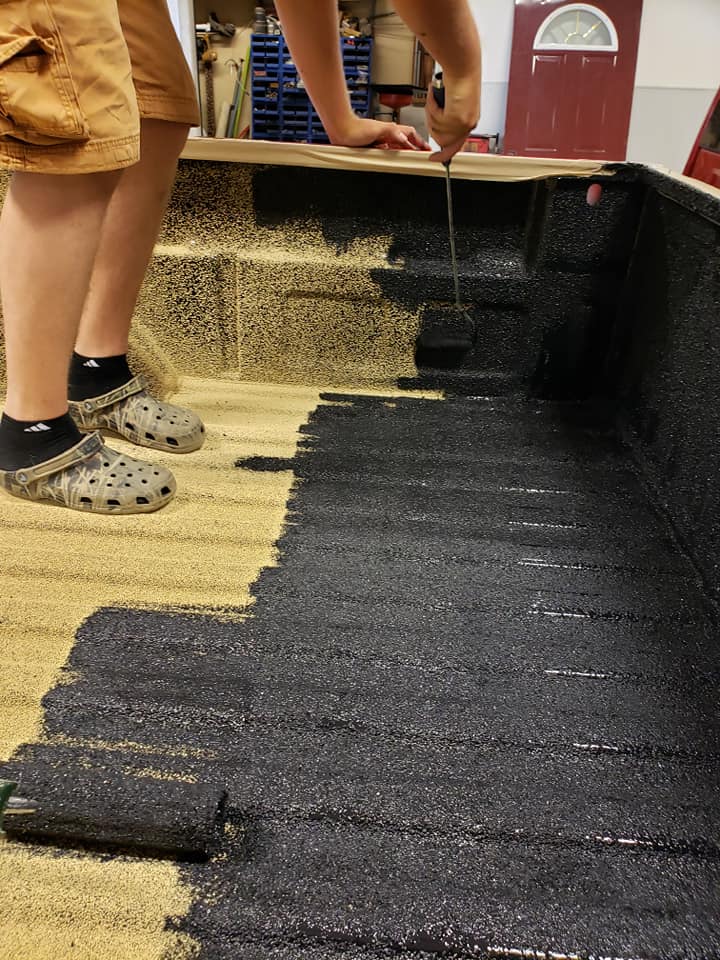
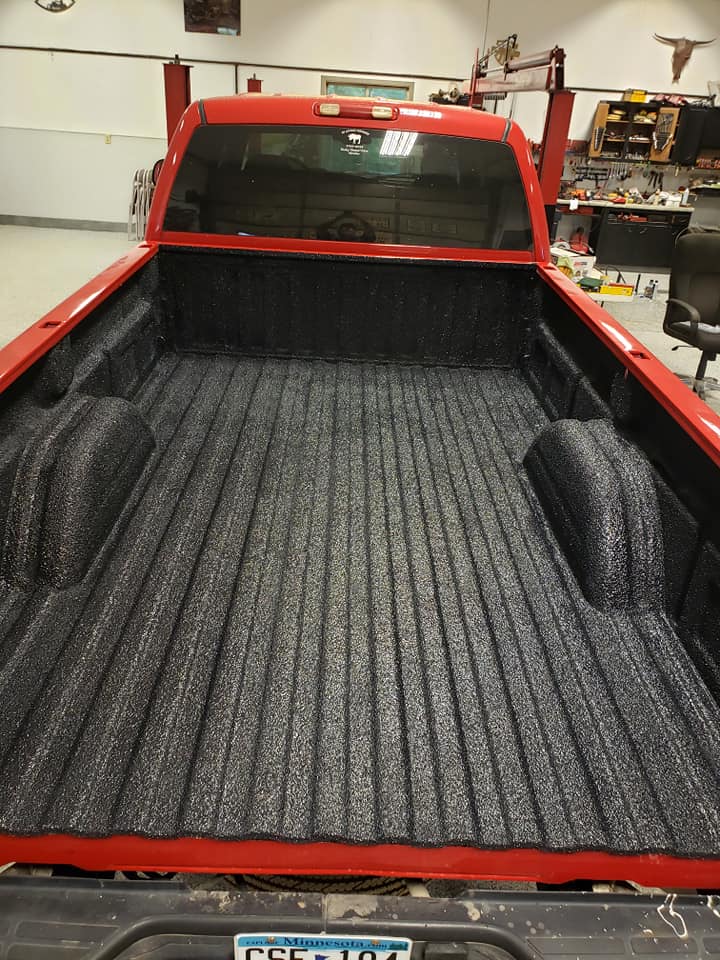
This is the process Duwayne Molden, a concrete contractor from Minnesota, used on one of his work trucks with SANI-TRED products. The general steps apply to most roll-on bed liners. Follow the coverage rates and recoat times for whatever product you use.
1. Clean the bed
Remove everything from the bed, including the tailgate hardware you want to keep clean. Wash with a degreaser to remove oil, dirt, and wax. Rinse well and let it dry.
2. Strip paint and rust
Sand or grind off old paint, loose coatings, and rust down to bare, sound metal. All old coatings, rust, and contaminants must come off so the liner bonds directly to the metal. Pay close attention to seams, corners, the area under the bed rails, and around tie-down points. Rust left behind keeps growing under any coating. Duwayne stripped his bed by sanding.
3. Wipe down
Blow off the dust and wipe the bare metal with a solvent to remove sanding residue and any remaining oil. Do not touch the prepared surface with bare hands.
4. Mask
Tape off the bed rails, tailgate edges, taillights, and anything else you do not want coated. Cover the rest of the truck with plastic if you are spraying.
5. Prime and add texture
Duwayne applied two coats of PermaFlex, a liquid rubber coating that penetrates the pores of the metal and bonds to it. While the second coat was still wet, he broadcast rubber texture granules into it for a slip-resistant surface.
6. Build thickness
Next he applied a 40 mil flood coat of LRB (Liquid Rubber Base). LRB cures at any thickness without gassing and bonds to itself, so it builds a thick, continuous rubber layer over the granules. At 40 mils, one gallon covers about 40 square feet (1,604 divided by the mil thickness). The mil thickness calculator works out how much you need for your bed.
7. Topcoat
He finished with a topcoat of PermaFlex. This seals the surface and gives the liner its final finish.
8. Let it cure
Keep cargo out of the bed until the coating has fully cured. Check the product’s cure times, and give it extra time in cold weather.



Tips for a better DIY bed liner
- Coat in a garage or on a dry, calm day. Dust, rain, and wind ruin a fresh coat.
- Use a brush to work coating into seams, corners, and around tie-downs before rolling the flat areas.
- Build extra thickness in the loading area behind the tailgate and over the wheel wells, where wear is heaviest.
- Seal the bed seams with a flexible rubber caulk before the final coats. SANI-TRED LRB mixed with TAV (Thickening Activator) makes a caulk-like rubber paste for this.
- Use the same process on trailer decks, utility beds, and dump bodies.
Frequently asked questions
Is truck bed liner paint worth it?
For a truck that hauls tools, gravel, or equipment, yes. A bonded liner protects the metal from scratches that lead to rust and keeps cargo from sliding. For a truck that rarely carries anything, a bed mat may be enough.
How long does a DIY bed liner last?
It depends on the coating, the thickness, and the prep. Thin aerosol coats wear out quickly. A thick, well-bonded rubber or urethane liner lasts much longer. Duwayne’s SANI-TRED liner is expected to outlast the truck.
Can you put bed liner paint over rust?
Remove loose rust first. Coating over flaking rust traps moisture and the rust keeps spreading under the liner. Sand or grind to sound metal, then coat.
Is a rubber bed liner better than a spray-in liner?
Both are bonded to the bed. A professional spray-in liner is applied quickly with special equipment. A roll-on rubber liner can be applied yourself, built to the thickness you want, and touched up later without special equipment.
How thick should a truck bed liner be?
Thick enough to take impact. Many durable liners are built up well past 20 mils. Duwayne’s included a 40 mil LRB layer on top of the primer and texture coats.
Can bed liner paint be used on other things?
Yes. People use it on trailer floors, toolboxes, rocker panels, and equipment. SANI-TRED bonds to steel, aluminum, wood, and concrete, so the same products work on many surfaces.
Coat your truck bed with SANI-TRED
SANI-TRED is a liquid rubber system that bonds to steel and aluminum, stays flexible, and builds to any thickness. It seals out moisture to protect against rust, and the textured finish keeps cargo in place. The products are solvent free, non-flammable, and low VOC, so they are easier to use in a garage than solvent-based bed liner kits.
- See SANI-TRED pick-up bed liners
- Learn about the basic product line: PermaFlex, LRB, and TAV
- Read about the slip-resistant textured system
- Order products in the shop
- Call 1-866-784-3308 to talk with a SANI-TRED tech before you start